FANUC CRX Gets Lighter, More Capable and More Open
The 2026 CRX story now includes an 11 kg portable cobot, heavier palletising, ROS 2 and a clearer route into modern control.
By WhatAI Editorial Team ·
FANUC CRX Is No Longer a Five-Model Family
FANUC CRX used to be easy to summarise as a dependable range of approachable collaborative robots with payloads from 5 kg to 30 kg. That description is now behind the product. In April 2026, FANUC America introduced the CRX-3iA, an 11 kg arm with a 3 kg payload and 692 mm reach. The company also announced heavier palletising support, new welding and fastening functions, positioner support, a path to the R-50iA controller, Python scripting and higher-frequency ROS 2 control. The family is becoming broader at both ends: easier to carry into small jobs, yet more capable inside engineered production systems.
The update matters because collaborative robotics has often forced buyers into an awkward compromise. A compact cobot can be easy to deploy but too heavy to move casually, while a higher-payload arm can become a permanent piece of factory equipment. The CRX-3iA makes portability a genuine design feature. At the other end, the CRX-30iA and specialised long-reach models let FANUC address palletising, welding, handling and machine work that demand more than a light tabletop arm. CRX is now less a single type of cobot and more a shared operating approach across several work envelopes.
The CRX-3iA Changes Where the Robot Can Go
The CRX-3iA is the most interesting addition because its defining number is not payload. It weighs 11 kg. FANUC says one person can carry it, and the official product material describes wall, ceiling and magnetic-base installation with automatic angle detection. Its 3 kg payload and 692 mm reach suit a welding torch, inspection sensor, screwdriver, small gripper or positioning tool rather than heavy material handling. That makes it relevant to shipbuilding, large fabricated structures, laboratories, maintenance areas and high-mix shops where the work is scattered instead of arriving at one fixed cell.
Portability can change the automation equation for tasks that are too short, too varied or too geographically dispersed to justify a permanently installed robot. A welding team could move the arm between prepared locations. A quality group could bring inspection to a large part. An engineering team could share one robot across fixtures while proving future automation. FANUC also describes touch sensing, automatic weld-point detection and path generation for portable welding workflows. These are useful application capabilities, but they still depend on compatible sensing, tooling, software, fixtures and process validation.
The Existing Range Still Carries the Workload
The original CRX models remain the centre of the family. The CRX-5iA carries 5 kg across 994 mm and weighs 25 kg. The CRX-10iA carries 10 kg across 1,249 mm. The CRX-10iA/L stretches that 10 kg envelope to 1,418 mm and adds an underflip motion that helps in confined layouts. The CRX-20iA/L uses the same 1,418 mm reach with a 20 kg payload, while the CRX-30iA reaches 1,756 mm with a standard 30 kg capacity. These differences are large enough to change both the possible task and the surrounding cell.
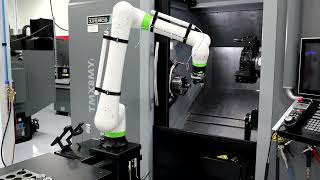
For machine tending, the shorter CRX-10iA may be sufficient when the robot sits close to one door and handles modest parts. A longer CRX-10iA/L can reach deeper or serve two nearby positions, but reach on paper is not the same as usable access around a machine enclosure. The 20 kg and 30 kg models provide more room for substantial grippers, cases and process tools. That advantage also brings greater mechanical weight, stored energy and stopping-distance considerations. The best model is normally the smallest one that satisfies the full payload, reach and orientation requirement with a sensible margin.
Forty Kilograms Needs Context
FANUC America’s April 2026 announcement says CRX-30iA palletising now supports payloads up to 40 kg when paired with a new high-flow air kit for large suction grippers. This is a meaningful expansion for cases and bags that sit above the arm’s normal 30 kg rating. It is also a capability that could be misread if copied into a short directory description without its application label. The public CRX-30iA product page continues to identify 30 kg as the maximum payload for the standard model.
A buyer should therefore treat 40 kg as a palletising-specific configuration that needs direct confirmation from FANUC or the system provider. Ask what load definition applies, which mounting and controller configuration is required, what gripper and air system are supported, whether the rating changes speed or motion limits, and which vertical or rotational moves are permitted. The allowable payload for one constrained case-handling pattern is not automatically the allowable load for welding, machine tending, manual guidance or an arbitrary six-axis trajectory.
Easy Programming Does Not Erase Engineering
CRX programming is built around a touchscreen Tablet Teach Pendant with icon-based, drag-and-drop instructions. Operators can manually guide the arm to a position, save the point and construct a routine without beginning in traditional robot code. Model-specific wrist buttons make direct teaching easier on some configurations. Approved device plug-ins can bring gripper, vision or accessory controls into the same interface. This is a well-judged experience for manufacturers that want the robustness of an industrial robot without placing every adjustment behind a specialist programming language.
The interface can make a routine understandable, but readability and production readiness are different achievements. A machine-tending program has to handle a door that fails to open, a part that is missing, a gripper that does not close, a cycle that times out, a machine alarm and an operator request to restart halfway through the sequence. A dispensing routine needs material-pressure checks and a way to manage interruptions. A palletiser needs stack state, failed-pick recovery and safe re-entry. Those behaviours are process engineering, even when each instruction is represented by an icon.
R-50iA Opens a More Modern Control Route
FANUC is bringing CRX into the R-50iA controller generation. Current CRX-20iA/L and CRX-30iA pages list both R-30iB Plus and R-50iA compatibility, while FANUC’s 2026 announcement describes R-50iA availability across the CRX lineup. The newer controller supports Python execution, software PLC functions and stronger cybersecurity features. FANUC also highlights higher-frequency ROS 2 and streaming motion support for AI-driven applications. This is a substantial shift for developers who have wanted modern integration methods alongside conventional robot control.
Python can be useful for communications, file handling, calculations, data processing and coordination with external systems. It should not be treated as a casual shortcut around robot safety or deterministic control. Teams need to know which functions execute in Python, which remain in the robot program, how exceptions are handled, where logs are stored and what happens if a script stops. Source control, review, backups, dependency management and commissioning tests become part of the machine lifecycle once a general-purpose language enters production.
ROS 2 Is Available Now, but Architecture Still Matters
FANUC states that its ROS 2 driver is available now for the CRX series. The official materials describe high-frequency control, MoveIt integration and simulation support, with documentation and packages available through FANUC’s official repositories. This gives research teams, advanced integrators and physical-AI developers a supported route into a familiar robotics ecosystem. It also makes CRX more relevant to organisations that want one robot platform to bridge factory automation, perception research and custom motion applications.
ROS 2 availability should begin an architecture discussion, not end it. Buyers need to confirm the supported controller, firmware, operating system, driver release, control mode and command frequency. They should decide which computer owns planning, which safety functions remain on the robot, how network loss is handled and whether an externally generated trajectory can be accepted in the intended operating mode. Simulation can accelerate development, but the real system still has payload, latency, collision, calibration and stopping behaviour that must be tested.
The Device Ecosystem Is Part of the Product
CRX is not sold as an arm in isolation. FANUC maintains a catalogue of compatible grippers, tools, cameras, pedestals, carts, feeders, weld packages, tool changers and mobile integrations. Many approved devices include CRX plug-ins intended to simplify setup from the Tablet Teach Pendant. FANUC iRVision adds integrated 2D and 3D vision workflows that can be configured from the pendant or a browser-capable device. This ecosystem can shorten the path from hardware selection to a working cell when the application matches a supported combination.
Plug-in does not mean every device is physically or operationally interchangeable. The tool still consumes payload, power, air, I/O and space. Its cable routing must survive the robot motion. A gripper needs enough stroke and force for the real parts, including tolerance, surface and presentation changes. A camera needs lighting, calibration, line of sight and a robust inspection or location strategy. A mobile base creates docking, navigation, battery, floor and safety questions. Compatibility is a starting point for integration rather than a substitute for it.
Food and Paint Models Are Real Specialists
FANUC offers food-grade versions of the CRX-5iA, CRX-10iA, CRX-10iA/L, CRX-20iA/L and CRX-30iA. Official descriptions identify NSF-H1 food-grade grease, white epoxy paint and corrosion-resistant plating for food handling, wet environments and hygiene-sensitive work. These models extend the CRX interface and mechanical range into packaging, product transfer and selected processing tasks where a standard industrial finish may be inappropriate.
The CRX-10iA/L Paint is similarly specific. FANUC describes an IP67 six-axis arm with 10 kg payload, 1,418 mm reach and approvals for explosion-protected painting environments, including ATEX classifications in European material and relevant US safety positioning on the American site. It is designed for liquid or powder coating, painting and fibreglass processes. Buyers must still verify regional certification, booth design, ventilation, applicator compatibility, grounding, hazardous-area equipment and operating modes. A paint-labelled cobot does not make an ordinary room suitable for spraying flammable material.
Eight Years Without Maintenance Needs to Be Read Precisely
FANUC repeatedly advertises eight years of zero maintenance for CRX motors, reducers, cables, sensors and grease. The reliability page says the claim is supported by accelerated life testing on castings, reducers, cables, sensors and printed circuit boards. This is a strong ownership proposition, particularly for businesses that associate industrial robots with scheduled grease changes and specialist service. It also fits FANUC’s wider support position, which includes 24/7 technical assistance, field service, parts and long-term product support.
The phrase does not mean the cell can be ignored for eight years. Grippers wear. Vacuum cups crack. Welding consumables need replacement. Camera windows become dirty. Fixtures loosen. External cables are damaged. Safety devices require inspection and validation. Process equipment follows its own maintenance schedule. Operators still need pre-use checks, and maintenance teams still need a documented response when noise, temperature, accuracy or behaviour changes. The claim applies to named robot components, not every item involved in production.
Cobot and Go Turns the Arm Into a Buying Route
Cobot and Go is FANUC America’s catalogue of pre-engineered CRX solutions from approved system providers. It covers application packages such as welding, palletising, machine tending, dispensing and mobile automation. This is useful because many first-time buyers do not need a menu of robot components. They need a system that handles a defined part, rate and environment, with one party responsible for making the pieces work together.
A pre-engineered package can reduce design effort and commissioning risk when the real task fits the standard envelope. It may bring proven tooling, software, guarding, mobility and operator controls. It can also conceal assumptions if the buyer treats the product name as a guarantee. Published case rates often depend on specified cartons, picks, heights and layouts. A welding package may require particular fixtures and material preparation. A machine-tending package still needs a machine interface and a safe method for doors, chucks and finished parts.
Pricing Requires a Complete-Cell Quote
FANUC’s current US CRX product pages direct buyers to request a quote rather than publishing one universal arm price. That makes the old estimated range in this WhatAI record unsuitable as a current fact. Model, controller, region, options, distributor and project scope can all influence price. More importantly, the arm is often only part of the investment. Tooling, vision, safety equipment, bases, fixtures, conveyors, machine interfaces, installation, programming, training, freight and support can exceed the cost difference between two robot models.
A useful quote separates the robot and controller from every option and service. It identifies the end effector, payload basis, software licences, vision hardware, safety system, electrical work, pneumatic equipment, fixtures, guarding, integration hours, onsite commissioning, training, spares and warranty. It also defines what the customer supplies. If a provider promises a cycle time, that promise should be tied to representative parts and an acceptance test. If the application is high mix, changeover and recipe creation need their own criteria.
Safety Depends on the Application
CRX robots use force monitoring, sensitive contact detection and collaborative functions that can support work near people. FANUC explains power and force limiting, hand guiding, safety-rated monitored stops and speed-and-separation monitoring as distinct collaborative operating methods. These capabilities are important. They do not make every CRX application safe without guarding. A bare arm moving slowly is not the same hazard as the same arm holding a sharp blade, hot welding torch, heavy case or high-force screwdriver.
The completed cell needs a risk assessment based on applicable machinery and robot standards, including the intended collaborative mode. The assessment must consider crushing and pinching between the arm and fixed equipment, the part and tool, unexpected startup, dropped loads, process hazards, stopping distance and operator behaviour. The safe result may use reduced speed, power and force limits, safety zones, scanners, light curtains, interlocked gates or fixed guarding. Several methods can exist in one cell as the task changes.
Where FANUC CRX Fits
FANUC CRX is strongest for manufacturers that want an approachable cobot experience while retaining access to a mature industrial automation company, broad partner network, approved device ecosystem and long-term service structure. The range now covers portable light-duty work, familiar 5 kg and 10 kg handling, long-reach tasks, heavier palletising, specialised food environments and certified painting applications. The available ROS 2 driver and R-50iA path also make it more credible for advanced developers than an interface-only reading would suggest.
The trade-off is that CRX remains an engineered industrial purchase. Pricing requires a quote. Options and controller choices need to be understood. The tablet is approachable, but the deeper FANUC ecosystem can still feel complex to a team without automation experience. Some competitors publish clearer online prices, offer different programming philosophies or include vision as a more central part of the base product. The right comparison is not brand against brand. It is the complete application, local integration support and lifecycle ownership offered for the same requirements.
WhatAI Editorial Verdict
FANUC CRX has become a more complete collaborative-robot platform in 2026. The CRX-3iA gives the range a genuinely portable entry point. The existing 5 kg to 30 kg models cover a useful progression of reach and load. Food-grade and paint variants address environments that generic cobots cannot enter casually. Cobot and Go provides a route to pre-engineered systems. ROS 2, R-50iA, Python and newer process capabilities show that FANUC is opening more doors for modern integration without abandoning its industrial foundation.
The caution is straightforward. Do not turn a special 40 kg palletising capability into a universal payload claim. Do not assume R-50iA or Python in a configuration that has not been quoted. Do not call a food-grade arm a hygienic cell or a paint model a complete hazardous-area installation. Do not let easy programming replace recovery logic, fixtures and acceptance testing. FANUC CRX earns attention because the platform now meets more factories where they actually are. It earns the purchase when the chosen model, controller, tooling, safety design and support plan solve one real process completely.
FANUC CRX is a collaborative robot family for manufacturers that want accessible programming without leaving the wider FANUC automation ecosystem. The 2026 range starts with the 11 kg CRX-3iA and extends through 5 kg, 10 kg, 20 kg and 30 kg models, plus food-grade and specialised paint versions. Buyers get manual guidance, a drag-and-drop tablet interface, force sensing and access to FANUC vision, devices, controllers, software, training and service.
FANUC CRX Models at a Glance
The CRX-3iA carries 3 kg across 692 mm and is designed for portable light-duty work. The CRX-5iA reaches 994 mm, the CRX-10iA reaches 1,249 mm, the long-arm CRX-10iA/L and CRX-20iA/L reach 1,418 mm, and the CRX-30iA carries 30 kg across 1,756 mm. FANUC also documents a special CRX-30iA palletising configuration supporting up to 40 kg. Specifications, controller compatibility and regional availability should be confirmed for the chosen configuration.
Programming, Integration and Safety
CRX routines can be created through drag-and-drop icons and manual-guided teaching, while optional tools add vision, device plug-ins, DCS safety functions, ZDT monitoring and deeper control integrations. FANUC has also made a ROS 2 driver available for the CRX series. These features can reduce programming friction, but every deployed cell still needs application engineering, payload validation, risk assessment and acceptance testing.
About FANUC CRX
FANUC CRX is a family of six-axis collaborative robot arms for manufacturing, laboratory, education, welding, handling, inspection, palletising, dispensing and other automation tasks. The 2026 range spans the ultra-light CRX-3iA through the CRX-30iA, with food-grade and explosion-protected paint variants for specialised environments. CRX robots combine force sensing, contact-stop functions, manual guidance and a drag-and-drop Tablet Teach Pendant with FANUC controllers, optional iRVision, approved device plug-ins, ROS 2 support and a large service network. FANUC sells CRX hardware and pre-engineered systems through a quotation process, so buyers need to budget for tooling, guarding or safety devices, fixtures, integration, training and support as well as the arm.
Use Cases
Key Features
- ✓ Six-axis CRX family with 3 kg to 30 kg standard payloads
- ✓ Reach options from 692 mm to 1,756 mm
- ✓ Internal force sensing and sensitive contact detection
- ✓ Tablet Teach Pendant with drag-and-drop programming
- ✓ Manual-guided teaching and model-specific wrist buttons
- ✓ FANUC-approved end-of-arm tools, accessories and plug-ins
- ✓ Optional integrated iRVision for 2D and 3D workflows
- ✓ Available FANUC ROS 2 driver for the CRX series
- ✓ R-30iB Plus and model-specific R-50iA configurations
- ✓ Food-grade and CRX-10iA/L Paint variants
- ✓ Pre-engineered Cobot and Go solution catalogue
- ✓ FANUC-advertised eight-year maintenance-free interval
Pricing
CRX-3iA
Quote required
- • 3 kg payload
- • 692 mm reach
- • 11 kg mechanical weight
CRX-5iA and CRX-10iA
Quote required
- • 5 kg or 10 kg payload
- • Compact general-purpose models
CRX-10iA/L and CRX-20iA/L
Quote required
- • 1,418 mm reach
- • 10 kg or 20 kg payload
CRX-30iA
Quote required
- • 30 kg standard payload
- • 1,756 mm reach
- • Special palletising options
Food and Paint Models
Quote required
- • Food-grade CRX variants
- • CRX-10iA/L Paint variant
Cobot and Go Systems
Integrator quote
- • Pre-engineered application systems
- • Tooling and cell scope vary
Pricing varies by plan and region — see current pricing.
Plan features change — last updated: 2026-08-17.
Details
Tags
FANUC CRX Community Discussions
Explore community discussions. Ask and answer questions on FANUC CRX to grow and learn together.
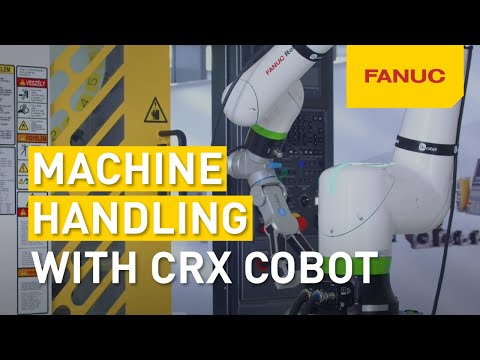
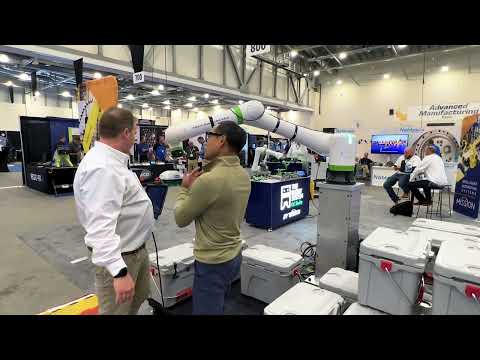
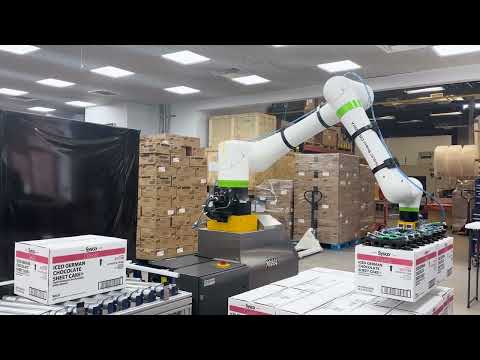
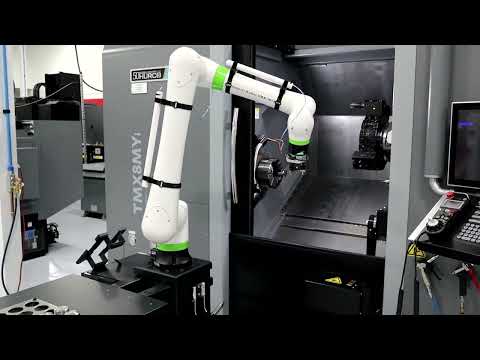
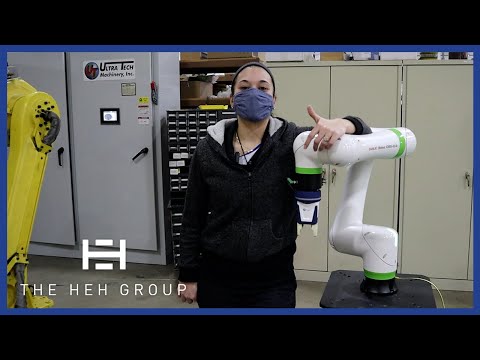
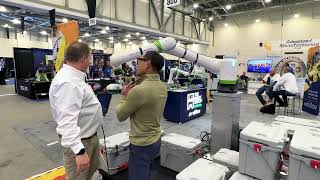
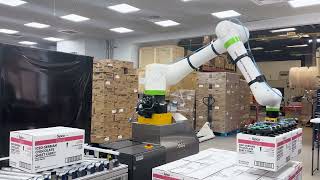
FANUC CRX Showcase
FANUC CRX — Frequently Asked Questions
What is the FANUC CRX?
FANUC CRX is a family of six-axis collaborative robot arms designed for approachable programming and industrial automation. It includes models for light handling, machine tending, welding, palletising, food work and specialised painting.
Which FANUC CRX models are available?
The core 2026 range includes CRX-3iA, CRX-5iA, CRX-10iA, CRX-10iA/L, CRX-20iA/L and CRX-30iA, plus food-grade versions and the CRX-10iA/L Paint. Regional configurations can differ.
How much payload can FANUC CRX carry?
Standard model payloads span 3 kg to 30 kg. FANUC also documents support for up to 40 kg in a specific CRX-30iA palletising configuration with appropriate options, so buyers should not treat 40 kg as the unrestricted rating for every task.
How much does a FANUC CRX cost?
FANUC does not publish a universal CRX list price on its current US product pages. The arm, controller, tooling, vision, safety equipment, fixtures, integration, training, freight and support should be quoted as a complete project.
Can beginners program a FANUC CRX?
The Tablet Teach Pendant uses drag-and-drop icons, and operators can guide the arm to teach positions. Beginners can learn basic routines, but production applications still require process knowledge, safety validation and recovery planning.
Does FANUC CRX support ROS 2?
Yes. FANUC states that its ROS 2 driver is available for the CRX series. Supported control rates, controller requirements, options and production support should be checked against the exact robot and software release.
Can FANUC CRX use Python?
Python execution is a standard capability of the R-50iA controller. FANUC has announced R-50iA availability across CRX and lists it for some CRX models, but controller compatibility and delivery configuration must be confirmed before purchase.
Does FANUC CRX need a safety fence?
Not always, but the answer depends on the completed application. Tooling, parts, speed, force, reach, hazards and human access must be assessed. Some cells can operate collaboratively, while others need scanners, interlocks, guards or separated operating modes.
What does eight years of zero maintenance mean?
FANUC advertises an eight-year maintenance-free interval for CRX motors, reducers, cables, sensors and grease, based on accelerated life testing. It does not remove inspection, tooling, cell, safety or application maintenance obligations.
Does FANUC CRX include vision?
Vision is available through FANUC iRVision and compatible devices, but it should be treated as a configured option rather than assumed in every base quote. Camera, lighting, calibration and application engineering can affect total cost.
What is Cobot and Go?
Cobot and Go is FANUC America’s catalogue of pre-engineered CRX solutions from approved system providers. It helps buyers start with an application package rather than specifying every cell component from scratch.
Which CRX is best for a first project?
Choose from the application backwards. Confirm payload including tooling, reach, orientation, cycle time, environment, safety and support. The smallest model that meets those requirements usually creates a clearer and more economical starting point.
Sources & References
- Official FANUC CRX series overview ↗
- FANUC America 2026 CRX expansion announcement ↗
- Official FANUC CRX-3iA product page ↗
- Official FANUC CRX-5iA product page ↗
- Official FANUC CRX-20iA/L product page ↗
- Official FANUC CRX-30iA product page ↗
- Official FANUC Europe CRX model overview ↗
- Official FANUC CRX reliability page ↗
- Official FANUC R-50iA controller page ↗
- Official FANUC ROS 2 driver page ↗
- Official CRX iRVision device page ↗
- Official FANUC Cobot and Go catalogue ↗
- FANUC collaborative robot safety overview ↗
- Official FANUC ZDT software page ↗
- Official FANUC robot technical support page ↗
Try FANUC CRX
Visit the official website to get started with FANUC CRX today.
Visit FANUC CRX →